Snake Plant Care: The Complete Guide to a Plant That Thrives on Neglect
There’s a running joke among plant people that the best snake plant care is no care at all. And honestly? It’s not far from the truth. The snake plant — also sold as mother-in-law’s tongue, and botanically reclassified from Sansevieria to Dracaena trifasciata back in 2018 — is a succulent from the rocky, arid regions of West Africa.
It stores water in its thick, upright leaves and survives droughts by simply waiting them out. It doesn’t need your devotion. It needs you to leave it alone.
That’s where most beginners go wrong, by the way. They buy a snake plant because it’s supposed to be indestructible, then water it every week, park it in rich potting soil, and watch it rot within months. Every snake plant problem I’ve ever diagnosed came from doing too much, never too little.
Overwatering is the number one killer; everything else is a distant second.
This guide is the full system: how light, water, soil, and seasons actually interact for a snake plant, a month-by-month rhythm you can follow without thinking, which variety suits your home, how to propagate without the classic variegation-loss heartbreak, and how to read your plant’s leaves like a dashboard.
By the end, you’ll water your snake plant less than any plant you own — and it will outlive them all.
Quick Answer
Snake plant care comes down to four things: bright indirect light (it tolerates low light but grows slowly there), watering only when the soil is completely bone-dry — every 2–6 weeks — fast-draining cactus or succulent soil, and a pot with drainage holes. Keep it at 65–80°F, and when in doubt, don’t water: overwatering kills most snake plants.
Snake Plant Care: Why Snake Plants Are Different (Built for Drought)
Most houseplants are tropical rainforest understory plants — they want humidity, steady moisture, and your attention. The snake plant is not one of those. It’s a succulent from West Africa’s rocky, arid landscapes, and its entire body is engineered around one idea: survive the dry season.
Those stiff, upright, sword-shaped leaves are water tanks. Thick and fleshy, they store moisture for weeks, letting the plant shrug off the exact conditions that kill thirstier houseplants.
Its root system is shallow and modest, designed to grab quick rain and then dry out fast — which is precisely why sitting in wet soil is so unnatural and so lethal for it. Root rot isn’t bad luck; it’s the plant drowning in an environment it was never built for.
Here’s the part most care cards skip, and it’s genuinely fascinating: snake plants use CAM photosynthesis (Crassulacean Acid Metabolism). While most plants open their leaf pores during the day, snake plants do their gas exchange at night — absorbing carbon dioxide and releasing oxygen after dark.
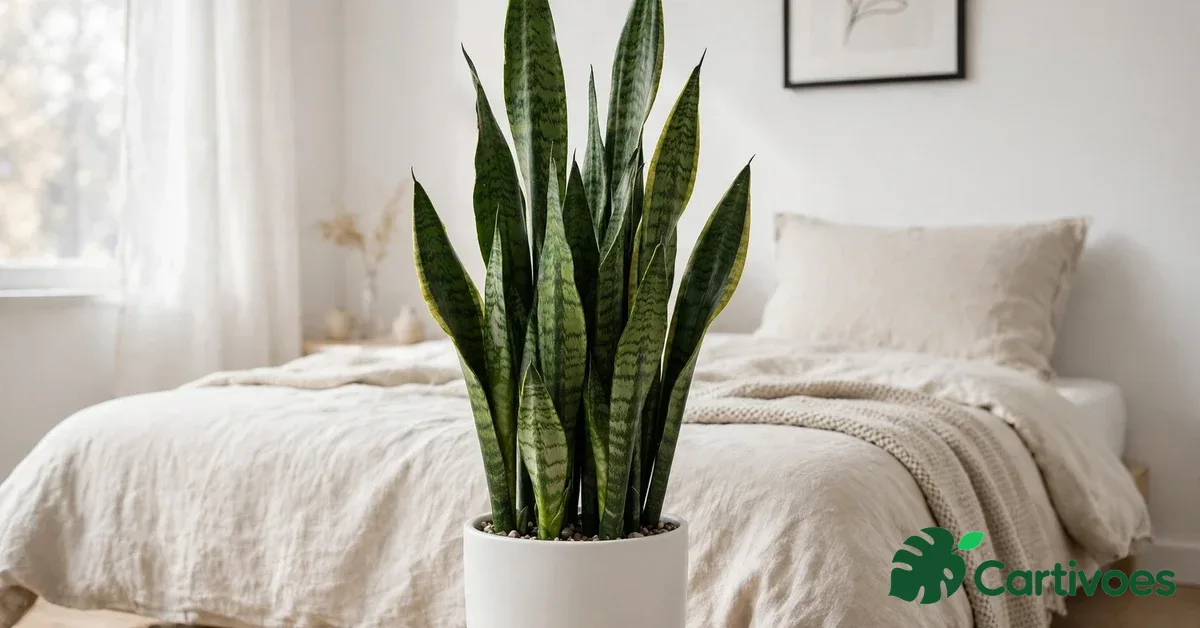
It’s a water-saving trick from desert plants, and it has a lovely side effect: a snake plant in your bedroom is quietly oxygenating the air while you sleep. Not enough to replace ventilation, but it’s a real, measurable trait, not marketing.
Understanding this biology is the whole game. Every recommendation in this guide — the bone-dry watering, the gritty soil, the terracotta pot — flows from one fact: you’re growing a desert plant in a living room. Treat it like a tropical and it suffers. Treat it like what it is and it becomes the easiest plant you own.
The One Rule That Governs Everything
If you remember nothing else from this guide, remember this: when in doubt, wait. Snake plants die from kindness. They almost never die from being ignored.
Why does this rule work so reliably? Because the failure modes are lopsided. An underwatered snake plant shows its distress gradually — leaves wrinkle, tips brown — and recovers fully with one good drink. An overwatered snake plant rots silently underground; by the time the leaves turn yellow and mushy at the base, the roots are already gone.
One mistake is fixable. The other is fatal.
So build your whole routine around dryness, not a calendar. Don’t water on Sundays because it’s Sunday. Water when the soil is bone-dry all the way through — and if you’re even slightly unsure, give it three more days. A snake plant that goes six weeks without water in winter is completely fine.
A snake plant watered weekly in a cool room is on a countdown.
This isn’t permission to forget the plant exists. It’s permission to trust the plant’s design. Check the soil every week or two, yes — but act only when it’s truly dry. Think of yourself less as a caretaker and more as a drought-season manager: your job is to hold back the water until the plant asks.
Light: The Bright-Ideal, Dark-Tolerant Spectrum
Here’s the honest version of the light story. Snake plants are famous for surviving dark corners, and that’s true — they’ll live for years in a dim hallway. But surviving isn’t thriving. In bright, indirect light, a snake plant grows two to three times faster, keeps its variegation crisp, and regularly sends up new pups.
In deep shade, it mostly just… sits there. Alive, but paused.
The sweet spot is bright, indirect light: near an east- or west-facing window, or a few feet back from a south-facing one. Direct, hot afternoon sun through glass can scorch the leaves — bleached patches, brown tips — so filter it with a sheer curtain or pull the plant back a couple of feet.
| Light level | What to expect | Best varieties for it |
|---|---|---|
| Bright indirect (near east/west window) | Fastest growth, sharpest variegation, regular pups | All varieties — this is where they thrive |
| Medium indirect (a few feet from window) | Steady growth, healthy leaves | Laurentii, standard trifasciata, Cylindrica |
| Low light (dim room, north window) | Survives for years but barely grows; variegation dulls | Plain trifasciata, Zeylanica |
| Direct hot sun | Scorched, bleached leaves; brown patches | None — avoid |
One more light tip nobody mentions: dust the leaves. Those broad blades collect dust, and dust blocks light, which quietly slows photosynthesis. A wipe with a damp cloth every month or two genuinely helps the plant feed itself — especially in dimmer rooms where every photon counts. It’s the lowest-effort, highest-return chore in snake plant care.
Watering: The Bone-Dry Rule
Let’s get specific, because this is where snake plants live or die. Forget schedules. Your watering trigger is one physical condition: the soil is completely dry, top to bottom. Not “the top inch is dry.” Bone-dry all the way down.
The finger test fails for snake plants because the dangerous moisture hides at the bottom of the pot. Use the chopstick test instead: push a plain bamboo chopstick all the way to the bottom of the pot, then pull it out.
If it comes out completely clean and dry — no soil clinging, no damp smell, no cool feel — water. If there’s any moisture at all, wait three to five days and test again. A moisture meter works too, but the chopstick is free and never lies.
When you do water, water thoroughly. Drench the soil until water flows freely from the drainage holes, let it drain completely, then empty the saucer. A deep soak followed by full drainage mimics the desert rain-and-dry cycle the plant evolved for.
The opposite — little sips every few days — keeps the top moist and the roots soggy, which is exactly the rot recipe.
And never water into the center of the rosette. Water the soil, not the plant. Pooled water in the crown of leaves is an invitation to fungal problems, and the Missouri Botanical Garden’s own culture notes flag this exact mistake.
Your Seasonal Watering Calendar
Snake plants don’t grow at the same speed all year, so your watering shouldn’t either. Treat these as ranges keyed to the chopstick test, not appointments — but they tell you what “normal” looks like through the year:
| Season | Typical frequency | What the plant is doing |
|---|---|---|
| Spring (Mar–May) | Every 2–3 weeks | Growth resumes; days lengthen |
| Summer (Jun–Aug) | Every 2–3 weeks | Peak growing season; heat dries soil faster |
| Fall (Sep–Nov) | Every 3–5 weeks | Slowing down; reduce toward winter |
| Winter (Dec–Feb) | Every 5–8 weeks | Near-dormant; leave it alone |
Notice how winter watering drops off a cliff. In a cool room, a snake plant can easily go six to eight weeks between drinks. This is also when most people kill them — the room is dim, the air is still, the soil stays wet for weeks, and weekly watering turns lethal.
If your leaves start looking sad in winter, resist the instinct to water more. They’re just resting.
Fertilizer follows the same rhythm: feed monthly at half strength in spring and summer, nothing at all in fall and winter. And temperature matters year-round — keep the plant between 65 and 80°F, away from cold drafts, drafty winter windows, and heating vents. Cold damage shows up fast as brown, water-soaked patches, and unlike underwatering, it doesn’t reverse.
Soil and Pots: Drainage Is Everything
The richest, darkest potting soil at the garden center is the worst thing you can give a snake plant. It holds water like a sponge, and a snake plant’s shallow roots have no defense against that. What it wants is the opposite: a gritty, fast-draining mix that water runs straight through.
The standard recipe is simple: 2 parts cactus or succulent mix to 1 part perlite (or coarse sand). This creates air pockets so roots get oxygen between waterings. You can also buy pre-mixed cactus soil — just make sure it actually feels gritty, not fluffy.
If you only have regular potting soil on hand, cut it with at least 30–40% perlite. Never use dense garden soil indoors.
The pot matters as much as the mix. Terracotta with a drainage hole is the gold standard: the clay breathes, wicking excess moisture away from the roots, and the drainage hole is non-negotiable. Plastic and glazed ceramic pots hold moisture longer — workable, but they shrink your margin of error.
One practical note from the Missouri Botanical Garden: snake plants get top-heavy, so choose a pot that’s wider than it is tall for stability. There’s nothing sadder than a beautiful tall specimen tipping off a shelf.
And go small. Snake plants like being slightly snug — an oversized pot holds a lake of unused soil that stays wet. When you repot, step up only one to two inches in diameter. Your plant will thank you by drying out properly.
Feeding: Less Than You Think
Snake plants are the opposite of hungry. In their native habitat they grow in poor, rocky soil, and indoors they need remarkably little feeding. Over-fertilizing is a real and common problem — brown, crispy leaf tips and a white salt crust on the soil surface are the classic signs.
The entire annual feeding program: a balanced houseplant or cactus fertilizer, diluted to half strength, once a month in spring and summer. That’s roughly four to six feedings a year. Nothing in fall. Nothing in winter. If you skip a year entirely, the plant won’t even notice.
Already overfed? Flush the soil with plain water — a long, thorough soak that drains freely — to wash out salt buildup, then skip feeding for two to three months. The plant recovers; the lesson usually sticks.
Picking Your Variety: A Snake Plant for Every Spot
Not all snake plants behave the same, and picking the right one for your light is half the battle. The tall classic is Dracaena trifasciata ‘Laurentii’ with its gold-edged blades; but the family is wide, and the temperaments genuinely differ:
| Variety | Look | Temperament |
|---|---|---|
| Laurentii | Tall blades with gold-yellow edges | The classic; keeps variegation best in bright light |
| Moonshine | Silvery, broad, almost ghostly leaves | Stunning but slower; prefers brighter spots |
| Cylindrica | Round spears instead of flat blades | Extremely drought-tough; great for forgetful owners |
| Hahnii (bird’s nest) | Short rosette under a foot tall | Compact; tolerates lower light but hates wet soil even more |
| Masoniana (whale fin) | Single broad paddle-like leaves | Statement plant; slow-growing and patient |
| Zeylanica | Dark green, subtler striping | Closest to the wild type; most forgiving of dim rooms |
A rule of thumb that holds across the board: the more variegated the leaf, the more light it needs to hold its color. A Laurentii in a dark corner will slowly go muddy green. A plain green Zeylanica in the same corner will be perfectly content.
Match the plant to the spot and half your “care” is done at the nursery.
The Repotting Moment: Reading the Rhizomes
Here’s something competitors rarely explain: snake plants often do their best work when slightly root-bound. The rhizome — the thick underground stem the leaves rise from — likes pressure. A crowded pot encourages pup production, and some growers swear mild crowding even triggers the rare, fragrant flower spikes that almost never appear indoors.
So don’t repot on a schedule. Repot on evidence: roots circling out of the drainage hole, rhizomes pressing visibly against the pot walls, the pot bulging or (yes, really) cracking, or watering running straight through because there’s more root than soil. Every two to three years is typical; some specimens go longer happily.
When the moment comes: do it in spring, step up only one pot size, and use fresh gritty mix. Gently separate pups with their own roots if you want new plants — a clean, sharp knife through the rhizome, a day to callus, then into its own terracotta pot.
Division is also the only propagation method that preserves a variegated variety’s coloring, which brings us to…
Propagation: Three Methods, One Honest Warning
Snake plants propagate willingly — almost too willingly. Here are the three methods, ranked by what actually works:
- Division — the gold standard. When you repot, separate a clump with its own roots and rhizome and pot it up. Instant new plant, zero waiting, and — crucially — it’s the ONLY method that preserves variegation. A Laurentii divided stays a Laurentii.
- Water propagation — fun but slow. Cut a healthy leaf at the soil line, let the cut callus for 2–3 days, then stand the bottom inch in water. Roots appear in 4–8 weeks. The catch nobody tells you: leaf cuttings of variegated varieties revert to plain green. No gold edges. Just green.
- Soil propagation — patient but direct. Same start as water, but plant the calloused cutting straight into dry mix. Water sparingly. It skips the transplant shock, but you won’t know it’s working for weeks.
The honest warning, repeated because it breaks hearts: if your snake plant has variegation you love, only propagate by division. Leaf cuttings produce new growth from leaf tissue, and the variegation pattern doesn’t carry through. Division produces new growth from the rhizome, which carries the full genetic pattern. Every nursery knows this. Now you do too.
Troubleshooting: Reading the Leaves
Snake plant leaves are a dashboard. Learn to read the signals and you’ll rarely lose a plant:
| Symptom | Likely cause | Fix |
|---|---|---|
| Yellow, mushy leaves at the base | Root rot from overwatering | Unpot, trim all brown/mushy roots, let dry 24 hours, repot in fresh dry mix |
| Brown, crispy leaf tips | Underwatering, low humidity, or over-fertilizing | Deep water thoroughly; check salt crust; ease off feeding |
| Wrinkled, shriveled leaves | Long-term underwatering | One deep soak, then resume the bone-dry routine |
| Drooping, leaning leaves | Too little light or early root rot | Move brighter; check roots immediately if soil is wet |
| Brown water-soaked patches | Cold damage (draft, cold window) | Move to warmth; damaged leaves won’t recover — remove them |
| No growth for months | Winter dormancy or too-dark spot | Normal in winter; in summer, move to brighter light |
| White cottony spots | Mealybugs | Dab each with rubbing alcohol on a cotton swab; repeat weekly for a month |
See the pattern? Five of seven problems trace back to water or temperature. Get those two right and a snake plant’s troubleshooting list is one line long: wipe off the dust and admire it.
Pets, Kids, and Safety
The one real downside: snake plants are toxic to cats and dogs if chewed. The culprit is saponins — natural soap-like compounds that cause nausea, vomiting, and diarrhea. The ASPCA lists Sansevieria trifasciata (the older name still used in their database) as toxic to both cats and dogs, with clinical signs of nausea, vomiting, and diarrhea.
Serious poisoning is rare, but a curious cat can absolutely have a bad evening.
The fix is placement, not panic. Put snake plants on high shelves, in hanging planters, or in rooms pets can’t access. They also tolerate the dimmer light of an out-of-reach corner better than almost any other plant — one of the few houseplants where the pet-safe spot and a survivable spot overlap.
If a pet does chew leaves, remove any remaining plant material from the mouth and call your vet or the ASPCA Poison Control line at (888) 426-4435. Mild toxicity to humans too, so keep leaves away from small children who explore with their mouths.
Two authoritative references worth bookmarking: the ASPCA’s toxicity listing for snake plant — the full clinical-signs breakdown for pets. And for the botanical profile and university-grade culture notes, the Missouri Botanical Garden’s Plant Finder entry for Dracaena trifasciata is the gold standard.
Key Takeaways
- Snake plant care is a neglect system: bright indirect light, water only when the soil is bone-dry (every 2–6 weeks by season), gritty fast-draining soil, and a terracotta pot with drainage.
- When in doubt, wait — overwatering is the #1 killer; underwatering is always recoverable.
- Use the chopstick test, not a calendar: clean and dry means water now; any moisture means wait.
- Terracotta pots, gritty cactus/perlite mix, one-size-up repotting, and half-strength feeding in spring/summer only.
- Division is the only propagation method that preserves variegation; leaf cuttings of variegated varieties revert to plain green.
- Toxic to cats and dogs (saponins) — keep out of reach; otherwise one of the toughest, most rewarding houseplants you can own.
Conclusion
There’s a reason the snake plant is the default recommendation for beginners, offices, and everyone who has ever killed a fern: it’s a plant that genuinely wants less from you. Give it bright-ish light, water it only when the soil is bone-dry, put it in gritty soil and a terracotta pot, and then get out of its way.
That’s the whole philosophy, and it’s backed by the plant’s desert biology — every leaf is a water tank, every root is built for drought.
The real skill in snake plant care isn’t technique. It’s restraint. Resist the extra watering, the bigger pot, the richer soil. Let the plant do what it evolved to do, and it’ll reward your restraint with years — decades, honestly — of architectural, airy green that asks for almost nothing and forgives almost everything. Except sitting in water.
Never that.
Related Articles
- Spider Plant Care: Running the Cheerful Baby Factory at Home — another nearly indestructible classic with arching striped leaves.
- Pothos Plant Care: The Beginner’s Guide to the Vine That Forgives Everything — the trailing beginner favorite that forgives almost everything.
- Best Indoor Plants for Air Quality: The Honest Guide (What Science Really Says) — how snake plants stack up against other natural air filters.
- Jade Plant Care: Raising a Living Sculpture That Outlives Trends — another succulent that thrives on a drink-and-drought rhythm.
Frequently Asked Questions
Only when the soil is bone-dry, top to bottom — roughly every 2–3 weeks in spring and summer, every 4–8 weeks in fall and winter. Use the chopstick test: push a chopstick to the bottom of the pot; if it comes out clean and dry, water deeply until it drains. If there’s any moisture, wait a few days. Overwatering is the number one killer of snake plants.
No — they prefer bright, indirect light, like the glow near an east- or west-facing window. They famously tolerate low light and will survive for years in dim rooms, but growth slows dramatically and variegation dulls. Avoid hot, direct afternoon sun through glass, which can scorch and bleach the leaves.
In almost every case, overwatering. Yellow, soft, mushy leaves — especially at the base — signal root rot. Unpot the plant, trim away all brown or mushy roots, let the root ball dry for 24 hours, and repot in fresh, dry, gritty cactus mix. Then water only when bone-dry going forward.
Division is the best method: when repotting, separate a clump with its own roots and rhizome using a clean knife, and pot it in gritty mix — instant new plant. You can also root leaf cuttings in water or soil, but be warned: cuttings from variegated varieties (like Laurentii) revert to plain green. Only division preserves the variegation.
Yes. Snake plants contain saponins that are toxic to cats and dogs if chewed, causing nausea, vomiting, and diarrhea. The ASPCA lists Sansevieria trifasciata as toxic to both. Keep snake plants on high shelves or in rooms pets can’t access, and call your vet or ASPCA Poison Control at (888) 426-4435 if ingestion happens.
Partially, and honestly. NASA’s 1989 Clean Air Study found snake plants remove benzene, formaldehyde, trichloroethylene, and xylene in sealed test chambers. In a real ventilated home the effect is modest — you’d need many plants for a measurable difference. They also release oxygen at night via CAM photosynthesis, which makes them genuinely good bedroom plants.

Grace Miller is an indoor gardening specialist with over 10 years of hands-on experience growing — and rescuing — houseplants, from low-light apartments to a 200+ plant indoor jungle. Every care routine on Cartivoes is tested on her own collection first. She writes practical, beginner-friendly guides on monstera, snake plants, pothos and low-light plants, with a focus on what actually works in real homes.