Plant Care: The Complete System for Keeping Houseplants Alive and Thriving
Most houseplants don’t die from one bad day. They die slowly, from a system that’s slightly wrong — a dim corner here, a weekly watering habit there — until one morning the leaves give up. The good news? Plant care gets simple once you see it as five connected inputs, not a pile of tips.
Here’s the frame this guide teaches: light, water, roots, food, and air. Get those five roughly right and almost any houseplant forgives the rest. Get one badly wrong — usually light or water — and no amount of fertilizer, misting, or pep talks will save the plant.
Below, you’ll learn each input in plain English, the 10-minute weekly routine that holds the whole system together, and the exact order to troubleshoot in when a plant starts to decline. Master the system once, and every new plant you bring home slots straight into it.
Quick Answer
Plant care is a system, not a schedule: give each plant the right light first, water only when its soil test says it’s thirsty, keep roots in a draining pot with airy mix, feed lightly in the growing season, and run a 10-minute weekly check to catch problems while they’re still small.
Plant Care Is a System, Not a Tip List
Think of a houseplant as a factory with five supply lines. Light is the power supply — it drives photosynthesis, the engine everything else depends on. Water and food are raw materials, roots are the loading dock, and air is the ventilation. Cut any line and production slows, no matter how generous the others are.
This is why single-tip advice fails. “Water weekly” ignores your light. “Feed monthly” ignores your soil. Each input changes the others: a plant in bright light drinks faster, eats more, and grows quicker than the same plant in a dim corner. Care for the system and the details mostly take care of themselves.
The University of Georgia Extension says it bluntly in Growing Indoor Plants with Success: the most common causes of stress in interiors are low light and over-watering. Two inputs, out of five, cause most houseplant funerals — so this guide fixes them in order, light first, then water, then everything else.
Light First: The Input Everyone Misjudges
Light is the input everyone gets wrong, because human eyes lie. A room that looks bright to you can be a cave to a plant — your pupils adjust, a leaf can’t. Horticulturists measure light in foot-candles, and the scale is brutally simple: most foliage plants want 75 to 200 foot-candles or more to grow.
Now the math nobody tells you: light intensity falls fast with distance. Move a plant from the windowsill to six feet back and it may receive a quarter of the light — or less. That “bright room” reading drops from growing light to survival light, and the plant quietly switches from thriving to merely enduring.
- Low light (25–75 foot-candles): survival only. Snake plants, ZZ plants, and pothos endure it; almost nothing grows well there.
- Medium light (75–200 foot-candles): steady growth for most foliage plants — a few feet back from a bright window.
- High light (200+ foot-candles): vigorous growth, flowering, compact shape — right at an east or south window, or under a grow light.
Want the full measuring method — phone apps, lux conversions, and grow-light setups? Our deep guide to light covers it. Here, just remember the order of operations: fix light before you touch anything else. Half of all “watering problems” are secretly light problems wearing a disguise.
Water: A Decision, Not a Schedule
There is no watering day, and anyone who gives you one is guessing. A fern in terracotta by a sunny window might drink every three days; a snake plant in plastic, in January, might go a month. Same house, same owner, different thirsts. The variable isn’t the plant’s mood — it’s the system around it.
Replace the calendar with a test. Before watering, check the soil: push a finger two inches in, lift the pot to feel its weight, or use a chopstick — it comes out clean from dry soil and speckled from wet. Test first, then decide. That habit prevents more deaths than any product on the shelf.
When the test says drink, water properly: soak the root ball until water runs from the drainage holes, then empty the saucer within half an hour. Little sips are the worst of both worlds — the top stays damp while the roots below stay dry, and damp surfaces are where fungus gnats throw their parties.
Species differ in how dry they like to get — succulents want a full drought between drinks, ferns barely want to dry at all. That’s exactly why we wrote a dedicated watering guide: it gives you the four-check ritual and the dry-down level for every plant type you own.
The Root Zone: Pots, Drainage, and Mix Logic
Roots need two things that fight each other: water and oxygen. Soil settles that fight. A good indoor mix holds moisture inside its particles but drains freely between them, so air returns after every watering. Dense, soggy mix drowns roots — and drowned roots can’t drink, which is why overwatered plants wilt.
- Drainage holes are non-negotiable: a pot without them is a bucket, and roots sitting in a bucket rot. Use a nursery pot inside a decorative cover pot if you love the look.
- Size up slowly: repot only 1–2 inches wider. A swimming pool of extra soil stays wet for weeks and invites rot.
- Match the mix to the plant: chunky bark and perlite for monsteras and aroids, gritty and lean for succulents and snake plants, moisture-holding for ferns and calatheas.
- Terracotta breathes, plastic holds: porous clay dries soil faster — great for overwaterers; plastic and glazed ceramic suit thirsty plants and forgetful owners.
Repotting itself is a five-minute job once a year or two: roots circling the drainage hole or pushing the plant upward are your signal. Our soil and repotting guides walk through mix recipes by plant family. Here, the principle matters more than the recipe: air in the root zone is life.
Feeding Without the Folklore
Potting soil is not soil. It’s bark, coir, and peat — a structure, not a pantry — so nutrients run out within months. That’s the case for feeding. But here’s the part the folklore skips: plants in modest light grow slowly, and slow growth needs little food. Most houseplant feeding problems are overdoses, not deficiencies.
The working rule: feed at half the label strength, only while the plant is actively growing — typically spring through early fall — and stop completely in winter. Kansas State Extension’s houseplant tips give the same seasonal window: fertilize March through September, then let plants rest. More food never compensates for weak light; it just burns roots and crusts the soil with salts.
- Coffee grounds, eggshells, banana water: charming, mostly useless, occasionally gnat bait. A balanced fertilizer does the job measurably; kitchen scraps do it theatrically.
- Salt crust on the soil surface: flush the pot with plain water until it runs clear, then resume feeding at half strength.
- New plant? Don’t feed yet: nursery plants arrive pre-fed. Wait a month or two before adding anything.
Choosing between liquids, spikes, and slow-release granules — and the NPK numbers on the label — is a whole topic. Our plant food guide compares them honestly. For the system, remember this: food is the smallest lever you own. Light and water move plants; fertilizer just polishes.
Air: Humidity and Airflow, Honestly
Let’s be honest about humidity, because the internet isn’t. Yes, houseplants come from humid forests. No, your living room at 35% humidity will not kill a pothos, a monstera, or most foliage plants — they adapt, grow slower, and carry on. The plants that suffer are the thin-leaved divas: calatheas, ferns, and some orchids.
And misting? A ritual that raises humidity for twenty minutes. What works: grouping plants together, a pebble tray for the fussiest one, or a small humidifier nearby in winter heating season. Brown, crispy leaf edges are the complaint — check watering and fertilizer salts first, because they cause more crispy edges than dry air does.
Airflow is the quiet half of “air” that nobody mentions. Stagnant air around dense foliage invites fungal spots and lets pests settle in undisturbed. You don’t need a fan farm — an occasionally open window or a ceiling fan on low is plenty. Plants evolved with breezes; one keeps leaves dry and stems sturdy.
The 10-Minute Weekly Plant Care Routine
Systems drift. Light shifts with the seasons, soil dries faster when the heating kicks on, pests arrive on a new plant in June. The weekly routine is how you catch that drift early — ten unhurried minutes with your plants, coffee in hand, before small problems become funerals. It’s the highest-value habit in this guide.
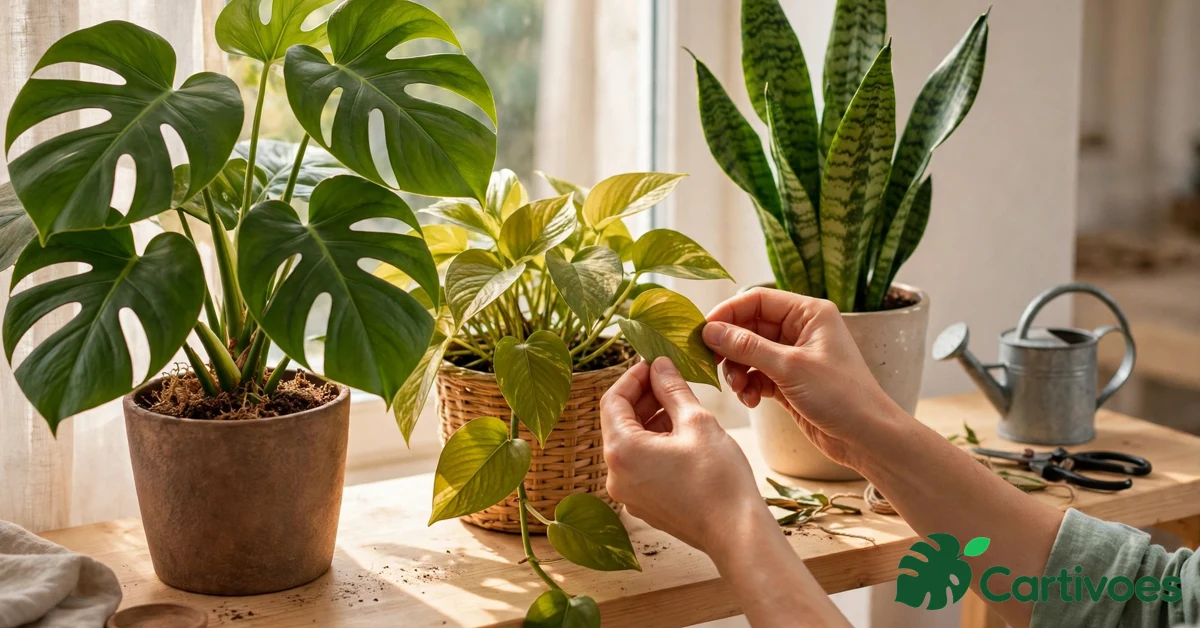
- Look first, touch second: scan every plant top to bottom — new growth, yellowing, spots, droop. Your eyes collect more data than your watering can.
- Check the undersides: flip a few leaves. Mealybugs, mites, and scale start underneath, where they’re easy to miss and easier to treat early.
- Test the soil: finger or chopstick in each pot. Water only the ones that pass the dryness test — the rest wait for next week.
- Water the thirsty properly: deep soak, drain fully, empty every saucer. No sips, no exceptions.
- Groom as you go: snip dead leaves, wipe dust off broad leaves, rotate each pot a quarter turn so growth stays even.
- Quarantine the suspicious: anything with bugs or mystery spots moves away from the collection until you know what you’re dealing with.
That’s it — no apps, no spreadsheets, no guilt. Ten minutes a week of genuine attention beats an hour of monthly panic care, every time. Plants rarely die suddenly; they decline in slow motion, and a weekly glance is how you stay ahead of the story instead of reading the ending.
When a Plant Declines: Troubleshoot in This Order
When a plant declines, people guess — and guess wrong, usually by watering a plant that’s drowning. Resist. Symptoms are ambiguous: yellow leaves can mean too much water, too little light, or old age. The fix is an order of investigation, most likely first. Work this list and stop when you find the culprit.
- Light — check it first: has the plant been moved, or has the season shortened its days? Leggy growth, pale new leaves, and a lean toward the window are light confessions.
- Roots — the truth is underground: slide the plant from its pot. Healthy roots are white or tan and firm; brown, mushy, sour-smelling roots mean rot, whatever the leaves are claiming.
- Water history — audit honestly: reconstruct the last month. Soggy throughout? Dry as dust for weeks? The pattern, not the last watering, is what matters.
- Pests — look last, look closely: undersides, leaf joints, stem crevices. Webbing, cottony clusters, sticky residue. Pests usually attack plants already weakened by steps one to three.
Notice what’s not on the list: fertilizer. A struggling plant can’t use food, and feeding one is like serving a banquet to a patient in intensive care. Fix the environment first; feed only a plant that’s actively growing again. That single restraint saves more plants than any tonic ever sold.
Your First-Year Plant Care Calendar
Finally, zoom out. Indoors, seasons still rule: light strengthens and fades, growth surges and rests. Align your care with that rhythm and everything gets easier — feeding lands when plants can use it, repotting lands when roots can recover. Here’s the first year at a glance; tape it inside a cupboard door.
| Season | The plant is… | Your moves |
|---|---|---|
| Spring (Mar–May) | Waking up; new growth starts | Repot if root-bound; resume half-strength feeding; ease plants closer to the light |
| Summer (Jun–Aug) | Growing fastest | Water most often; feed monthly; watch new growth for pests |
| Fall (Sep–Nov) | Slowing down | Ease off feeding; water less as light fades; bring outdoor plants in before cold nights |
| Winter (Dec–Feb) | Resting in low light | No feeding; water sparingly; keep clear of heat vents and cold drafts; dust the leaves |
Every species bends this calendar a little — snake plants rest harder, ferns barely rest at all. That’s what the individual care guides in this category are for: the calendar gives you the rhythm, and each plant’s own guide tunes it. Start with the system, then specialize. That’s the whole method, and it works.
Key Takeaways
- Plant care is a system of five inputs — light, water, roots, food, and air. They interact, so fix them in that order and most problems explain themselves.
- Light first: human eyes lie about brightness. Most foliage plants need 75–200+ foot-candles, and a few feet from the window can quarter the light.
- Water by test, not by calendar: check the soil, soak deeply, drain fully, empty the saucer. Overwatering kills more houseplants than everything else combined.
- Food is the smallest lever: half strength, growing season only, never on a struggling plant.
- Ten minutes a week beats monthly panic: look, test, water the thirsty, groom, quarantine the suspicious.
- Troubleshoot in order — light, roots, water history, pests — and stop guessing.
Conclusion
If plant care has felt like a hundred tips, here’s the relief: it’s five inputs, a weekly routine, and a troubleshooting order. Light, water, roots, food, air — in that priority, they explain everything a houseplant does, good or bad. You don’t need a greener thumb. You need a system, and now you have one.
Start this week. Pick your thirstiest-looking plant, run the soil test, check its light honestly, and give the whole collection its first ten-minute walk-around. Then let the system carry the load from here, and use the deep guides below whenever one input needs a closer look.
Your plants are about to get very boring to worry about — steady growth, no dramas, no emergency repots at midnight. Honestly? That’s the highest compliment a plant care system can earn, and the surest sign you’ve stopped collecting tips and started running a system.
Related Articles
- How to Water Houseplants: A System That Actually Works — the four-check ritual and the dry-down level for every plant type you own.
- Plant Food for Indoor Plants: Feed Like You Mean It — fertilizer types, NPK numbers, and honest feeding schedules.
- Grow Light for Indoor Plants: The Honest Setup Guide — measuring your light properly and choosing a grow light that actually works.
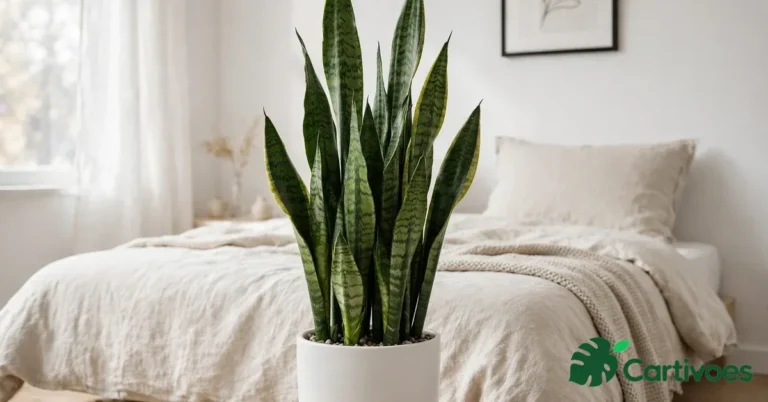
- Snake Plant Care: The Complete Guide to a Plant That Thrives on Neglect — this whole system applied to the most forgiving plant you can own.
Frequently Asked Questions
Five inputs: light, water, roots, food, and air. Put the plant where it gets enough light, water only when a soil test says it’s thirsty, use a pot with drainage holes and an airy mix, feed at half strength in spring and summer, and check every plant for ten minutes once a week. That routine alone keeps most common houseplants healthy for years.
There’s no fixed schedule — thirst depends on the plant, pot, soil, light, and season. Test the soil first: most foliage plants want watering when the top 1–2 inches are dry, while succulents and snake plants should dry out completely. In practice that’s roughly weekly in summer and every two to three weeks in winter for an average plant in average light.
Overwatering, and it usually starts with good intentions. Watering on a schedule keeps soil constantly wet, roots suffocate and rot, and the plant wilts — which looks like thirst, so people water more. University extensions consistently name overwatering and low light as the top causes of houseplant stress. Test the soil before every watering and you’ll avoid most of it.
More than most rooms provide by the sofa. Horticulturists measure in foot-candles: low light is 25–75, medium is 75–200, and high is over 200. Most foliage plants grow properly in medium to high light — within a few feet of a bright window. Light drops fast with distance, so a plant six feet from the glass may get a quarter of the windowsill’s light.
No. Winter light is weak, growth slows or stops, and a resting plant can’t use the food — unused fertilizer just builds up as salts that burn roots and crust the soil. Feed only during active growth, typically March through September, at half the label strength. If salts have crusted the surface, flush the pot with plain water until it runs clear, then wait for spring.
Because water is only one of five inputs, and the most common hidden culprit is light. A plant in a dim spot grows slowly, drinks slowly, and sits in wet soil that rots its roots — so more watering makes it worse. Troubleshoot in order: check the light, inspect the roots, review the last month’s watering honestly, then look for pests underneath the leaves.

Grace Miller is an indoor gardening specialist with over 10 years of hands-on experience growing — and rescuing — houseplants, from low-light apartments to a 200+ plant indoor jungle. Every care routine on Cartivoes is tested on her own collection first. She writes practical, beginner-friendly guides on monstera, snake plants, pothos and low-light plants, with a focus on what actually works in real homes.