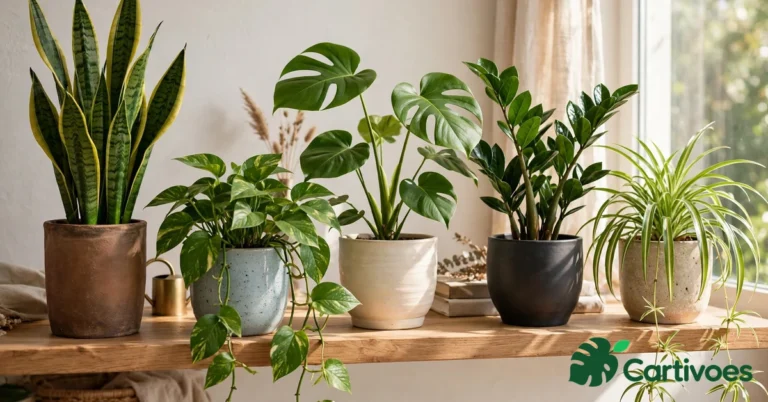
Houseplants: The Complete Beginner’s Guide to Thriving Indoor Plants
Here’s a secret the plant industry doesn’t advertise: most houseplants die from kindness, not neglect. Too much water, too much fertilizer, too much fussing — love, applied incorrectly. The good news? Keeping houseplants alive isn’t a talent. It’s a small set of learnable skills, and this guide teaches all of them in plain English.
Whether you’re buying your very first pothos or staring at a half-dead fiddle-leaf fig wondering where it all went wrong, this is your operating system.
We’ll cover how to choose the right plant for your actual home (not the fantasy version), what you really need to buy, what to do in the first 30 days, the six care pillars that govern everything, how to read what your plant is telling you, and how to grow from one plant to a full indoor jungle — without the overwhelm.
Fair warning: this guide is long because the subject deserves it. But you don’t need to memorize it. Learn the framework, bookmark the diagnostic table, and you’ll know more than 90% of plant owners by the end.
Quick Answer
Houseplants thrive when you match the plant to your home’s light and water only when the soil says so. Start with a forgiving plant (snake plant, pothos, ZZ plant or spider plant) in bright indirect light, water when the top 1–2 inches dry, and use a pot with drainage holes. Overwatering kills more houseplants than everything else combined.
Why Houseplants? The Honest Case
Let’s start with what houseplants actually do for you — and one thing they don’t. The real benefits are well documented: caring for plants reduces stress, improves mood and concentration, and makes a room feel alive in a way no decor object can.
A trailing pothos softens a harsh bookshelf; a big monstera turns a rental into a home. These effects are genuine.
Now the myth to clear up early, because you’ll see it everywhere: houseplants are not meaningful air purifiers. The famous NASA chamber studies get quoted endlessly, but follow-up research is clear — at realistic numbers in a normal ventilated home, a few plants don’t measurably clean your air. You’d need a greenhouse per room.
Grow houseplants because they’re beautiful, calming, and rewarding — not as a substitute for opening a window.
The other honest truth: houseplants teach patience like nothing else. You can’t rush a new leaf. And that’s rather the point.
Choose Your First Plant: The 3-Question Framework
Most beginners choose backwards — they fall for a plant on social media, bring it home, and then discover their north-facing basement apartment is a desert for a sun-loving succulent. Flip the process. Answer three questions first, and the right plant picks itself:
- What light does the spot actually get? Stand where the plant will live at midday. Is it within a few feet of a bright window, or across a dim room? Be brutally honest — “bright room” and “bright spot for a plant” are different things. More on reading your windows below.
- How do you actually water? Not how you wish you watered — how you really behave. Do you fuss over things daily, or forget for weeks? There’s a perfect plant for either personality, but only if you’re honest. Chronic forgetters need snake plants and ZZ plants; attentive types can handle peace lilies and ferns.
- Who else lives here? Curious cats, dogs, and toddlers change everything. Many beloved houseplants — pothos, philodendron, peace lily, snake plant — are toxic if chewed. Apply the pet-safety filter BEFORE you shop, not after.
Get these three right and your first plant practically takes care of itself. Get them wrong and even an “unkillable” plant will struggle — because no plant is unkillable, only well-matched.
The 7 Best Beginner Houseplants
These seven earned their reputation the hard way — by surviving millions of beginners. Each forgives late watering, tolerates imperfect light, and telegraphs its needs clearly before things get dire:
| Plant | Light | Water | Standout trait | Pet-safe? |
|---|---|---|---|---|
| Snake plant | Low to bright indirect | Every 2–3 weeks | Nearly indestructible; thrives on neglect | No |
| Pothos | Low to bright indirect | Every 1–2 weeks | Trails beautifully; droops when thirsty | No |
| ZZ plant | Low to bright indirect | Every 2–4 weeks | Glossy leaves; stores water in rhizomes | No |
| Spider plant | Bright indirect | Every 1–2 weeks | Makes baby plantlets; very forgiving | Yes |
| Philodendron (heartleaf) | Low to bright indirect | Every 1–2 weeks | Fast trailer; easy to propagate | No |
| Peace lily | Low to medium | When soil dries | Dramatically droops when thirsty, then recovers | No |
| Parlor palm | Low to medium | Every 1–2 weeks | Soft tropical look; tolerates dim corners | Yes |
If you have pets that chew, start with the spider plant or parlor palm — both are non-toxic to cats and dogs according to the ASPCA. Everyone else: the snake plant, pothos, or ZZ plant is the classic first plant for a reason. Buy ONE to start.
Learning how a single plant responds to your home’s light and your habits is infinitely easier than juggling five different care schedules.
What You Actually Need to Buy: The Starter Kit
Walk into a garden center and you’ll be offered moisture meters, specialty “plant food” spikes, misting bottles, and humidifiers before you’ve even picked a plant. Here’s the honest breakdown of what matters and what’s marketing:
- A pot with drainage holes. Non-negotiable. This single item prevents more deaths than all the gadgets combined. If you fall for a holeless decorative pot, use it as a sleeve around a plain nursery pot — and empty any pooled water.
- Quality indoor potting mix. Not garden soil — it compacts in pots and can harbor pests. A bagged indoor mix is fine for most plants. Worth every penny.
- A watering can with a narrow spout. Lets you water the soil, not the leaves. That’s the whole job description.
- Your finger. Free, always calibrated, and more reliable than most cheap moisture meters. Poke two inches into the soil — dry means water, damp means wait.
What’s optional: a humidifier (genuinely useful in dry winter homes for tropical plants, but most beginners don’t need one on day one), a grow light (only if your windows truly can’t deliver), and fertilizer (a basic balanced houseplant fertilizer for spring — skip the exotic formulations).
What’s pure marketing for beginners: misting bottles marketed as humidity solutions (the effect lasts minutes), “plant food spikes” (inconsistent dosing), and decorative moss marketed as moisture control (it hides the soil you need to check). Start simple. Upgrade when a specific problem — not a salesperson — tells you to.
Your First 30 Days: The New-Plant Plan
The first month sets the trajectory. Your plant just traveled from a humid, bright greenhouse to your living room — it’s stressed, and a little shock (a dropped leaf or two) is normal. Here’s the week-by-week plan:
- Days 1–3: quarantine and observe. Keep the new plant away from your other plants for two weeks. Inspect under the leaves and at stem joints for pests — hitchhikers are common. Don’t repot yet; let it acclimate.
- Days 4–7: find its spot. Place it according to its light needs (see the window guide below). Resist the urge to water “to welcome it” — check the soil first; nursery soil is often already wet.
- Week 2: first real watering. By now the top inches have likely dried. Water thoroughly until it drains, empty the saucer, and note the date. This starts your rhythm — not a schedule, a rhythm based on checking.
- Week 3: light check. Is it leaning toward the window? Rotate the pot a quarter turn. Any scorched patches? Move it back a foot. The plant is giving you feedback — listen.
- Week 4: settle in. If roots are bursting from the drainage holes or water runs straight through, consider repotting (spring is ideal, but a badly rootbound plant can be repotted anytime). Otherwise: congratulations, you’ve completed onboarding. Skip fertilizer for the first month — nursery soil has enough.
The mindset shift that matters most: you’re not maintaining a decoration, you’re learning a living thing’s language. Month one is language class.
Light: Reading Your Windows
Light is the fuel for everything your plant does, and it’s the variable beginners misjudge most. “Bright indirect light” — the phrase on every plant tag — is maddeningly vague until you map it to your actual windows. Here’s the translation:
| Window direction | Right at the glass | A few feet back | Across the room |
|---|---|---|---|
| South (brightest) | High light — cacti, succulents | Bright indirect — most tropicals | Medium light |
| East / West | Bright indirect to gentle direct | Medium-bright indirect | Low-medium light |
| North (dimmest) | Medium indirect | Low-medium light | Low light — snake plant territory |
Two practical notes. First, seasons change everything — a spot that’s perfect in June can be gloomy in December; be ready to shuffle plants closer to windows in winter. Second, sheer curtains are magic: they turn harsh direct sun into the bright indirect light most tropical houseplants crave.
When no window works, a full-spectrum grow light 12–18 inches above the plant for 10–12 hours a day is a genuine substitute, not a compromise.
How do you know the light is wrong? Too little: leggy stretched stems, small pale leaves, leaning hard toward the window. Too much: bleached or crispy brown patches, faded color. Plants are honest critics — adjust and watch.
Watering: The Skill That Saves Everything
If houseplant care has a single master skill, it’s watering — and specifically, *not* watering on a schedule. “Every Tuesday” kills plants because a plant’s thirst changes with light, season, pot size, and humidity. Oklahoma State Extension puts it bluntly: more houseplants die from improper watering than from any other single cause.
Here’s the method that replaces the calendar:
- Check. Push your finger about two inches into the soil. Dry? Water. Damp? Walk away. For succulents and cacti, wait until it’s dry all the way through.
- Soak. Water slowly and evenly until it flows freely from the drainage holes. Half-watering leaves dry pockets where roots die.
- Drain. Empty the saucer. A pot sitting in water is a pot with rotting roots — no exceptions.
- Adjust seasonally. Growth slows in fall and winter, so water needs drop. The classic beginner mistake is keeping the summer rhythm all winter.
Use room-temperature water — cold water shocks roots — and skip softened water, which carries salts plants hate. Unglazed clay pots dry faster than plastic or ceramic, so check them more often. And remember the golden rule you’ll hear from every experienced grower: it’s better to underwater than overwater.
A thirsty plant perks up within hours of a drink; a rotted plant rarely recovers.
Soil, Pots & Drainage: The Foundation
Roots live in the dark doing the unglamorous work, and they have exactly two requirements: moisture and air, at the same time. That’s what good soil and drainage deliver. Get this right and watering becomes forgiving; get it wrong and even perfect watering can’t save the plant.
- Use indoor potting mix, not garden soil. Garden soil compacts in containers, suffocating roots, and can import pests and disease. Bagged indoor mix is engineered to stay airy.
- Drainage holes are mandatory. Every pot. No exceptions. Holeless decorative pots are sleeves, not homes — keep the nursery pot inside and empty pooled water.
- Don’t put gravel in the bottom. The old “drainage layer” advice is a myth — research shows it actually slows water movement and creates a soggy zone. Fill the whole pot with proper mix.
- Repot with restraint. Move up only 1–2 inches in pot diameter when roots fill the pot (spring is ideal). Oversized pots hold wet soil around small root systems — a classic rot setup.
A solid all-purpose recipe if you ever mix your own: roughly equal parts potting soil, peat or coco coir, and perlite. Airy, moisture-retentive, and forgiving — the holy trinity of indoor mixes.
Humidity & Temperature: The Invisible Half of Care
You can’t see humidity, which is why beginners ignore it — and why tropical plants crisp up in heated winter homes. Most houseplants evolved in humid forests; the average heated home in winter drops below 30% humidity, and brown crispy leaf edges are the telltale complaint.
- Aim for 40–60% humidity. That’s the comfort zone for most houseplants — and, conveniently, for humans too. A $15 hygrometer tells you where you stand.
- The humidifier is the real fix. Pebble trays and grouping plants help at the margins; a small humidifier near your tropicals actually moves the needle. Misting? The effect evaporates in minutes — nice ritual, negligible humidity.
- Keep temperatures 65–75°F. Most houseplants are comfortable where you’re comfortable. The killers are extremes and swings: furnace blasts, AC vents, drafty doors, and leaves pressed against freezing winter glass.
- Bathrooms are cheat codes. Warm, steamy, bright bathrooms are spa retreats for humidity-lovers like ferns and calatheas. Kitchens run a close second.
One caution from the EPA side of the ledger: don’t push whole-house humidity past 60% chasing plant happiness — that’s mold territory. Humidify the plant corner, not the house.
Feeding: Less Is More
Here’s the truth about fertilizer: it’s the least important of the care pillars, and the easiest to overdo. A plant in good light with proper water will thrive for months on what’s already in its potting mix. Fertilizer is a supplement, not fuel — light is the fuel.
- Feed only in the growing season. Spring through early fall, roughly every 4–6 weeks with a balanced houseplant fertilizer at half the label strength. Skip fall and winter entirely.
- New plants don’t need food. Fresh potting mix contains enough nutrients for the first month or two. Feeding a stressed new arrival is like offering dessert to someone with motion sickness.
- Watch for salt buildup. White crust on the soil surface or pot rim means fertilizer salts are accumulating. Flush the pot with plain water until it drains freely — a seasonal rinse keeps roots happy.
- Yellow leaves usually aren’t hunger. Beginners reach for fertilizer at the first yellow leaf, but the cause is almost always water or light. Diagnose before you dose.
Room by Room: Where Each Plant Thrives
Instead of asking “what plant should I buy,” ask “what does this room offer?” Match the plant to the room’s actual conditions and everything gets easier:
| Room | Typical conditions | Best picks |
|---|---|---|
| Bright living room | Big windows, social space | Monstera, fiddle-leaf fig, bird of paradise (statement plants earn their keep here) |
| Bedroom | Medium light, cooler nights | Snake plant, ZZ plant, parlor palm (tolerate lower light; snake plant is a classic nightstand pick) |
| Bathroom (with window) | High humidity, variable light | Ferns, calathea, peace lily, pothos (humidity lovers thrive on shower steam) |
| Kitchen | Bright, humid, warm | Pothos, spider plant, herbs like basil (herbs pull double duty) |
| Home office / desk | Medium light, small space | ZZ plant, peperomia, small pothos (compact, low-drama, camera-friendly) |
| Dark hallway / corner | Low light | Snake plant, ZZ plant, cast iron plant (the only honest answers for genuinely dim spots) |
The dark-corner row deserves emphasis: low-light tolerant does not mean no-light. Every plant needs some daylight; in a truly windowless spot, even a snake plant needs a grow light. If a room has no natural light at all, that’s a decor decision, not a plant decision.
Reading Your Plant: The Diagnostic Table
Plants can’t talk, but they’re excellent communicators. This table translates the most common complaints — bookmark it, because you’ll use it more than any other section:
| Symptom | Most likely cause | First thing to try |
|---|---|---|
| Yellow lower leaves, soft stems | Overwatering | Let soil dry out fully; check roots for rot |
| Brown crispy leaf edges | Low humidity or underwatering | Water thoroughly; raise humidity |
| Leggy stems, small pale leaves | Too little light | Move closer to a window or add a grow light |
| Bleached / scorched patches | Too much direct sun | Move back from the window; add a sheer curtain |
| Drooping despite wet soil | Root rot | Unpot, trim mushy roots, repot in fresh dry mix |
| Drooping with dry soil | Underwatering | Water deeply — it should perk up within hours |
| No growth for months (growing season) | Too little light or rootbound | More light; check if roots fill the pot |
| White crust on soil | Fertilizer salt buildup | Flush pot with plain water until it drains |
| Fine webbing under leaves | Spider mites | Shower the plant; treat with insecticidal soap |
| White cottony clusters | Mealybugs | Dab with rubbing alcohol; treat and isolate |
The meta-skill here: change one thing at a time, then wait a week. Beginners often repot, move, fertilize, and prune in the same panicked afternoon — and then can’t tell what helped. Plants respond slowly; give each fix time to work before trying the next.
Pests & Pet Safety
Healthy, unstressed plants resist pests far better than struggling ones — good care is the best pesticide. Still, inspect new plants during quarantine and glance under leaves whenever you water.
The usual suspects: spider mites (fine webbing, stippled leaves — worst in dry air; shower the plant and treat with insecticidal soap), mealybugs (white cottony clusters in leaf joints — dab with rubbing alcohol), scale (brown bumps on stems — wipe off and treat with horticultural oil), and fungus gnats (tiny flies hovering over soil — they mean the mix stays too wet; dry it out).
Pet safety is the section to read before you shop. Many beloved houseplants are toxic to cats and dogs: pothos, philodendron, peace lily, and snake plants can cause mouth irritation, drooling, vomiting, or worse if chewed — and true lilies can cause kidney failure in cats from even pollen or vase water.
The safe starters: spider plants, parlor palms, Boston ferns, and prayer plants are all non-toxic. Check every new plant on the ASPCA’s toxic and non-toxic plant database before it comes home, and if a pet chews something suspicious, call your vet or ASPCA Poison Control at (888) 426-4435 immediately.
Two university-backed resources worth bookmarking: UGA Extension’s Caring for Houseplants guide walks through light, water, humidity, and repotting with the steady voice of experience, and Oklahoma State’s Houseplant Care fact sheet is the deep reference — drainage science, potting media ratios, and a full problem-solving section.
From One Plant to Indoor Jungle: The Progression Path
Here’s the part nobody talks about: how a collection actually grows without turning into a guilt-inducing plant graveyard. There’s a natural progression, and skipping stages is how beginners end up with twelve struggling plants instead of three thriving ones.
- Stage 1: The Survivor (months 1–3). One forgiving plant. Your only job: learn its rhythm — how fast its soil dries, how it looks when happy. Keep it alive and you’ve passed.
- Stage 2: The Confident Pair (months 3–6). Add one plant with slightly different needs — maybe a trailing pothos if you started with a snake plant. Now you’re managing variety, not just survival.
- Stage 3: The Room Designer (months 6–12). Start placing plants by room using the matrix above. This is when it gets fun — you’re decorating with living things and each spot’s conditions make sense to you now.
- Stage 4: The Propagator (year 1+). Root a pothos cutting in water. Pot up a spider plant baby. Suddenly your collection multiplies for free — the most satisfying stage.
- Stage 5: The Collector (year 2+). Now — and only now — earn the finicky beauties: calatheas, fiddle-leaf figs, variegated monsteras. You have the skills; the plants are the reward.
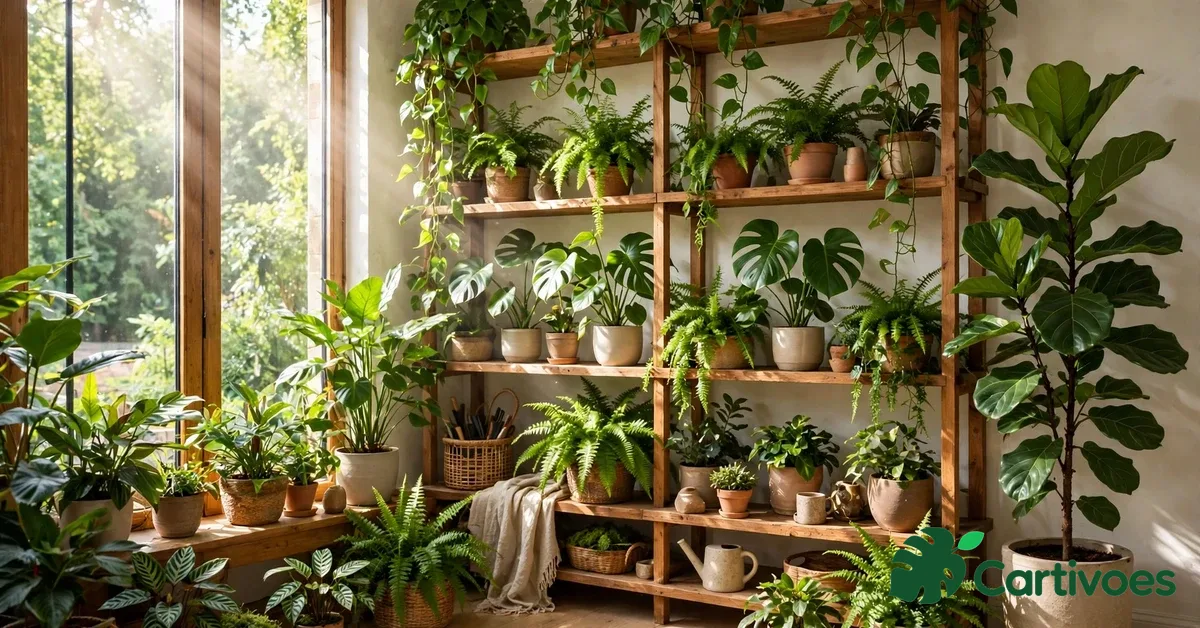
Notice what’s missing from this path? The stage where you buy seven plants in one garden-center trip because they were on sale. We’ve all been tempted. The jungle in the photo at the top of this article? It started as one plant, too.
Key Takeaways
- Houseplants don’t need talent — they need a system: match the plant to your light, water by checking soil (not calendars), and keep conditions steady.
- Choose your first plant with 3 questions: what light does the spot really get, how do you actually water, and who else lives here (pets change everything).
- Start with one forgiving plant: snake plant, pothos, ZZ plant for forgetful waterers; spider plant or parlor palm for pet-safe homes.
- You need four things: a pot with drainage holes, quality indoor potting mix, a watering can, and your finger. Everything else is optional.
- Bright indirect light suits most tropicals — map it to your windows (south brightest, north dimmest) and expect to shuffle plants in winter.
- Overwatering kills more houseplants than anything else: check 2 inches down, soak thoroughly, empty the saucer, and cut back in winter.
- Read your plant: yellow soft leaves = too much water; crispy edges = dry air; leggy pale growth = too little light. Change one thing at a time.
- Grow in stages — one survivor, then a pair, then room-by-room design, then propagation, then the finicky collector plants. Don’t skip stages.
Conclusion
Houseplants reward a particular kind of attention — not constant fussing, but steady, observant care. Check the soil before you water. Notice which way the plant leans. Learn what your windows actually offer across the seasons. That’s genuinely most of it. The plant does the growing; your job is just to stop getting in its way.
So start where you are: one forgiving plant, a pot that drains, and the willingness to pay attention for a month. A year from now, you’ll look at that first snake plant — a little taller, maybe with a pup — and realize the jungle didn’t come from a shopping spree.
It came from the quiet habit of checking the soil on a Sunday morning. Welcome to the club; the watering can’s by the sink.
Related Articles
- Best Indoor Plants: 10 Forgiving Picks Matched to Your Home (and Habits) — our ranked starter list — the easiest indoor plants for every light level.
- Snake Plant Care: The Complete Guide to a Plant That Thrives on Neglect — the near-indestructible beginner classic — full care guide.
- Pothos Plant Care: The Beginner’s Guide to the Vine That Forgives Everything — trailing, fast, and forgiving — everything about growing pothos.
- Spider Plant Care: Running the Cheerful Baby Factory at Home — pet-safe and prolific — care plus propagation of the plantlets.
Frequently Asked Questions
Snake plant, pothos, ZZ plant, and spider plant top every honest list. They forgive missed waterings, tolerate a range of indoor light, and show clear signals (like drooping) before they’re in real trouble. If you have pets that chew plants, start with a spider plant or parlor palm instead — both are non-toxic to cats and dogs.
There’s no universal schedule — it depends on the plant, pot size, light, and season. The reliable method: push your finger two inches into the soil; water thoroughly only when it feels dry, then empty the saucer. In practice that’s often every 1–2 weeks in summer and less in winter. Overwatering kills far more houseplants than underwatering.
Yellow leaves are usually a water or light issue, not hunger — don’t reach for fertilizer first. Soft yellow lower leaves typically mean overwatering; yellow with brown crispy edges suggests underwatering or dry air; pale yellow all over with leggy growth points to too little light. Check the soil moisture and the plant’s light before changing anything else.
Most popular houseplants prefer bright indirect light, not direct sun — direct midday sun scorches the leaves of tropicals like monstera, pothos, and peace lily. Cacti, succulents, and citrus are the exceptions that want direct sun. An east window (gentle morning sun) or a few feet back from a south/west window with a sheer curtain is the sweet spot for most.
Many popular ones are not: pothos, philodendron, peace lily, and snake plants are toxic if chewed, and true lilies can cause kidney failure in cats. Pet-safe choices include spider plants, parlor palms, Boston ferns, and prayer plants. Always check a new plant on the ASPCA’s toxic and non-toxic plant database before bringing it home.
Winter’s triple threat is low light, dry heated air, and overwatering. Move plants closer to windows, cut watering back as growth slows, raise humidity with a humidifier or pebble tray, and keep plants away from furnace vents and cold drafts. Don’t fertilize in winter — wait for spring’s new growth.

Grace Miller is an indoor gardening specialist with over 10 years of hands-on experience growing — and rescuing — houseplants, from low-light apartments to a 200+ plant indoor jungle. Every care routine on Cartivoes is tested on her own collection first. She writes practical, beginner-friendly guides on monstera, snake plants, pothos and low-light plants, with a focus on what actually works in real homes.